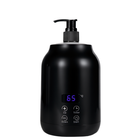



Warm massage oil instantly makes a treatment more pleasant. The first contact with the skin feels softer, muscles relax faster and clients experience the massage as more luxurious and professional. At the same time, the right temperature matters: oil that is too cold feels unpleasant, while oil that is too hot can be uncomfortable and may even affect the quality of the oil.
In this blog we explain what the ideal temperature for massage oil is, why oil from a warmer can feel hotter than it does on the skin, and what to watch for when you heat different types of massage oil.
What is the ideal temperature of massage oil on the skin?
For most massages, the ideal temperature of massage oil on the skin is between roughly 42 and 47 °C. In this range the oil feels warm and relaxing without becoming too hot for the skin.
Warm oil helps muscles relax faster and makes the first contact with the skin far more pleasant. Especially in cooler treatment rooms or during deeper massages, warm oil can make a big difference to how the treatment is experienced.
Why the warmer's temperature can be higher
Many people assume the temperature set on an oil warmer is the same as the temperature of the oil on the skin. In practice, that is almost never the case.
During use, massage oil loses heat at several moments. It already cools slightly in the bottle and pump mechanism. When the oil is pumped it also comes into contact with air, which lowers the temperature a little more. It then cools further when it lands on the therapist's hands before being applied to the skin.
As a result, the oil can lose a few degrees before it actually reaches the skin. That is why the warmer is usually set slightly higher than the temperature you want on the skin.
Why oil warmers can heat up to 65 °C
Many professional oil warmers can reach temperatures of around 65 °C. That does not mean the oil itself actually reaches that temperature.
In practice, massage oil usually heats up to about 50 °C in the bottle. Oil conducts heat less efficiently than water, and the bottle and pump mechanism hold back part of the heat. On top of that, the oil cools immediately once it is pumped out of the warmer.
When oil leaves the warmer at around 50 °C, the final temperature on the skin is usually around 42–47 °C, which most people find ideal for massage.
Differences between types of massage oil
Not every massage oil responds to heat in the same way. The thickness of the oil plays an important role.
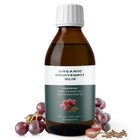
Thinner oils, such as grapeseed oil or fractionated coconut oil, heat up relatively quickly and spread warmth easily. These oils often already feel pleasantly warm at a slightly lower temperature.
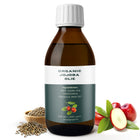
Thicker oils, such as almond oil, jojoba oil or richer massage blends, need a little more heat to feel comfortably warm. Because these oils are more viscous, it often takes a little longer before they are fully up to temperature.
Can you heat all massage oils?
Most plant-based massage oils can be heated without any problem. Oils such as almond oil, jojoba oil, grapeseed oil and fractionated coconut oil remain stable at the temperatures normally used during massage.
When a massage oil contains essential oils, however, it is important to be extra careful with the temperature. Essential oils are more sensitive to heat. When they get too hot, they can lose their scent and properties.
When massage oil is heated to around 50 °C, both the base oil and any essential oils generally stay intact and keep their quality.
Why heating with a candle is not a good idea
Massage oils are sometimes heated with a candle or open flame. While this can create an atmospheric effect, it is not an ideal method in terms of quality and safety.
An open flame can heat the oil in an uncontrolled way, so the temperature locally becomes much higher than intended. This makes essential oils break down faster and can make the oil too hot for the skin.
That is why it is safer to use an electric oil warmer with a temperature control. These warmers keep the temperature constant and controlled, so the oil heats evenly without becoming too hot.
Why a microwave isn't ideal either
Heating massage oil in a microwave can seem like a quick fix, but it is not ideal either. A microwave often heats oil unevenly, so some parts of the oil can become much hotter than others.
It is also hard to control the temperature precisely. This creates the risk of the oil getting too hot, which can be uncomfortable for the skin and is less good for the quality of the oil and any essential oils.
An oil warmer with temperature control is therefore a much safer and more reliable way to heat massage oil.
Which temperature do we recommend?
For a comfortable and safe massage, we recommend heating massage oil to a maximum of about 50 °C. Because the oil cools by a few degrees during use, the temperature on the skin usually ends up around 42–47 °C.
At this temperature the quality of the massage oil is preserved, and the oil still feels pleasantly warm during the treatment.
A simple tip for therapists
It is always wise to test the oil on your own hand first before using it on a client. That way you know the temperature feels pleasant, and you can adjust the warmer slightly if needed.
Warm oil completes the massage
Well-heated massage oil makes for a more pleasant start to the treatment and helps muscles relax faster. By heating the oil in a controlled way and keeping the temperature on the skin around 42–47 °C, you create a comfortable and professional massage experience.