












With sensitive skin, the choice of massage oil is not a detail but a deciding factor. Where one oil supports and soothes the skin, another can cause redness, irritation or a tight feeling after the massage.
In practice we see that many complaints don't come from the massage itself, but from the wrong choice of oil. That's why it's important to look beyond glide or price alone, and assess how an oil actually works with the skin.
In this article we analyse the most commonly used massage oils based on structure, absorption, skin compatibility and risk of irritation.
What should a good massage oil offer?
For sensitive skin, these are the most important properties:
- The oil should be absorbed well without forming a sealing layer
- The fatty acid profile should match the skin's natural barrier
- The chance of allergic reactions should be minimal
- The oil should be nourishing without overloading the skin
This seems obvious, but in practice far from all oils meet these criteria.
Comparison of the most commonly used massage oils
| Oil | Texture | Absorption | Nourishing power | Risk of irritation | Suitable for sensitive skin |
|---|---|---|---|---|---|
| Apricot kernel oil | Light | Fast | High | Very low | ⭐⭐⭐⭐⭐ Best choice |
| Almond oil | Medium | Average | High | Low–medium | ⭐⭐⭐⭐ Good, with a caveat |
| Grapeseed oil | Very light | Very fast | Low–medium | Low | ⭐⭐⭐ Fair |
| MCT oil | Light | Fast | Low | Very low | ⭐⭐⭐ Safe but basic |
| Sesame oil | Heavy | Slow | High | Medium | ⭐⭐ Limited suitability |
| Mineral oil | Medium | Not absorbed | None | Low | ⭐ Insufficient |
Analysis per oil
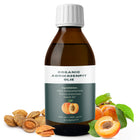
Apricot kernel oil – the optimal balance for the skin
In the professional massage world, apricot kernel oil is often seen as the safest choice for sensitive skin. This is because its composition closely resembles the skin's natural lipids.
The oil feels light, is absorbed quickly and supports the skin without sealing it. This lets the skin breathe and keeps the chance of irritation to a minimum.
For both dry and sensitive skin types, this is in practice the most consistent choice.
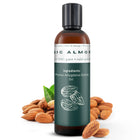
Almond oil – effective, but not universal
Almond oil is known for its nourishing effect and pleasant massage properties. The oil contains many unsaturated fatty acids and supports the skin barrier.
At the same time, this is also its main limitation: it is a nut oil. With sensitive or allergy-prone skin, it can actually trigger reactions.
That is why almond oil suits most skin types, but is less predictable on truly sensitive skin.
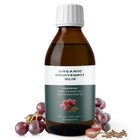
Grapeseed oil – light and fast, but less supportive
Grapeseed oil is often chosen for its light texture and quick absorption. The skin doesn't feel greasy afterwards, which can be pleasant.
The flip side is that this oil contains relatively few nourishing components. With regular use, the skin can actually feel a bit drier.
For oilier skin this can be a good choice, but for sensitive skin it often lacks just the support that's needed.
MCT oil – stable and neutral
MCT oil is a fractionated form of coconut oil and is widely used for its stability and long shelf life.
The oil is odourless, is absorbed quickly and gives a clean skin feel. At the same time it offers little active skin care. There are hardly any vitamins or antioxidants present.
This makes MCT oil a safe base, but not an oil that actively improves the skin.
Sesame oil – intensive, but less suitable
Sesame oil has a rich, nourishing profile and is traditionally used in Ayurvedic treatments.
For sensitive skin, however, this oil is often too intense. The texture is heavier, the scent pronounced and the chance of skin reactions higher than with lighter oils.
This makes sesame oil less suitable as a standard massage oil for sensitive skin types.
Mineral oil – functional, but not skin care
Mineral oil is widely used in commercial products because of its low price and long shelf life.
However, the oil stays on top of the skin and forms a sealing layer. The skin feels smooth as a result, but there is no real absorption or nourishment.
For a short massage this is functional, but for sensitive skin that benefits from support and repair, it is not a suitable choice.
Conclusion
For sensitive skin, it isn't about the richest or most nourishing oil, but about the right balance between absorption, skin compatibility and mildness.
Best choice:
Apricot kernel oil – light, effective and reliable
Good alternatives:
Grapeseed oil (for dry skin)
Sesame oil (too intense)
Mineral oil (no skin improvement)
Practical advice
Always choose:
- 100% pure oil
- Cold-pressed
- Without fragrance or essential oils
This reduces the chance of skin reactions and ensures a stable result, especially with sensitive skin.